CV Search
AI-Powered Resume Intelligence - from upload to shortlist in seconds
Recruiters manually scan hundreds of CVs to fill one role. Keyword filters miss good candidates. Spreadsheets don't explain why someone matches. The result: hours of manual screening, missed talent, and no audit trail for hiring decisions.
CV Search is a prototype that uses AI to read, understand, and index resumes - then lets recruiters search in plain English and paste a job description to get a ranked, explained shortlist. It works with any file format, handles bulk uploads, and degrades gracefully when AI services are unavailable.
How It Works
1Upload & Extract
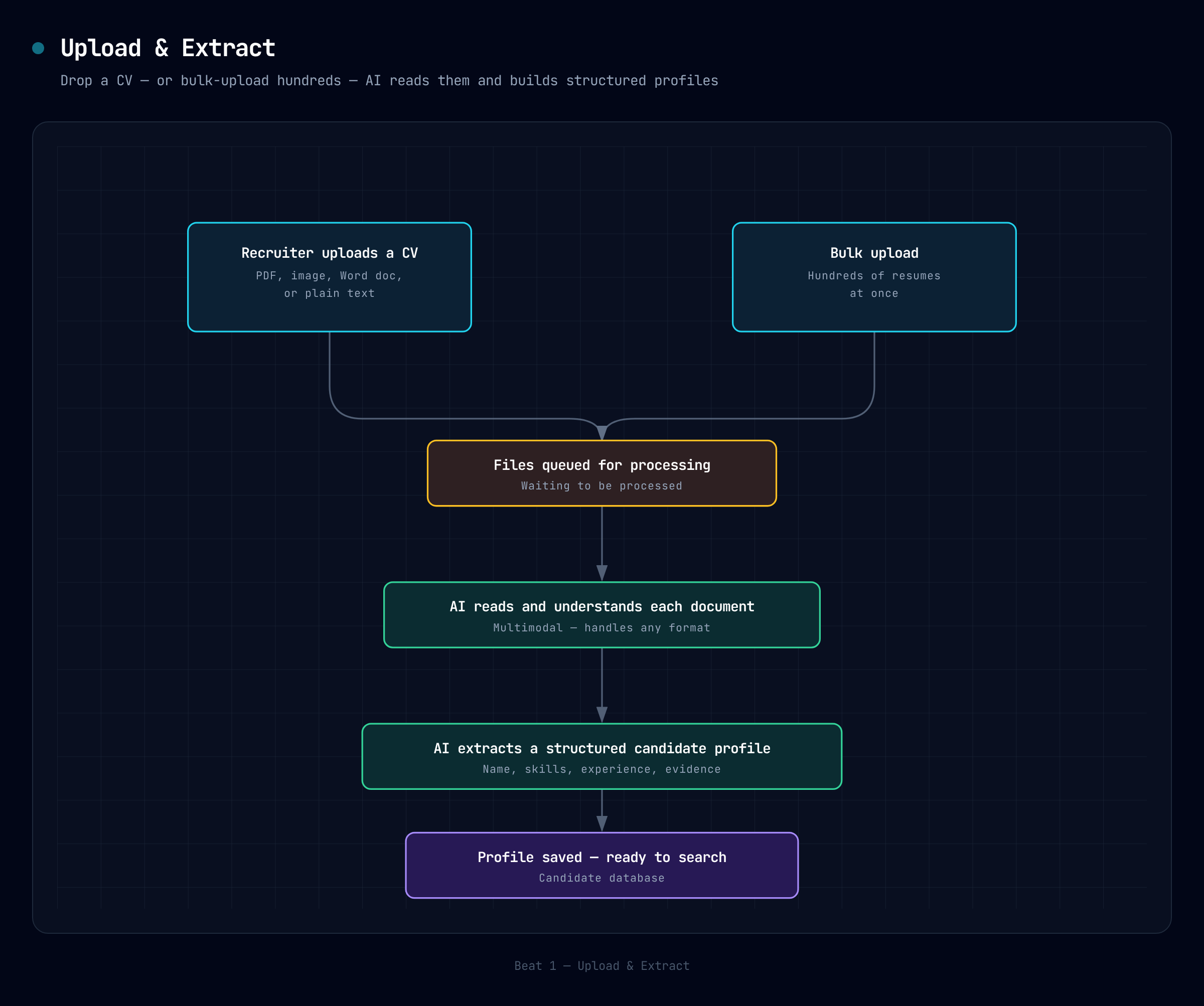
Drop a single CV or bulk-upload hundreds. The AI reads any format - PDF, image, Word doc, or plain text - and extracts a structured candidate profile with name, skills, experience, and evidence from the document itself.
2Search in Plain English
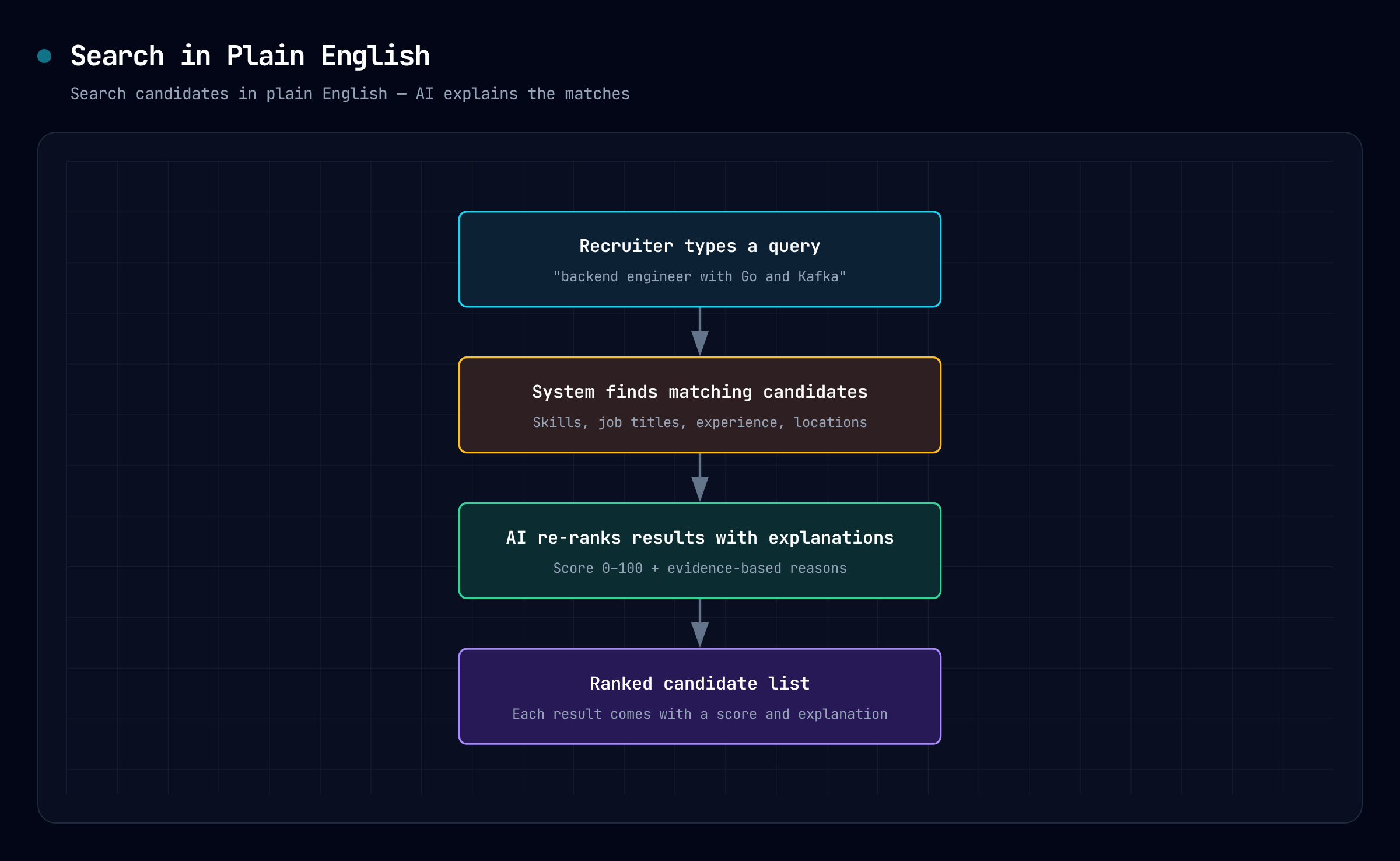
Type what you need, not what's in a dropdown: "backend engineer with Go and Kafka." The system finds matching candidates by keywords, then AI re-ranks the results with a score and a human-readable explanation for each match.
3Paste a JD, Get a Shortlist
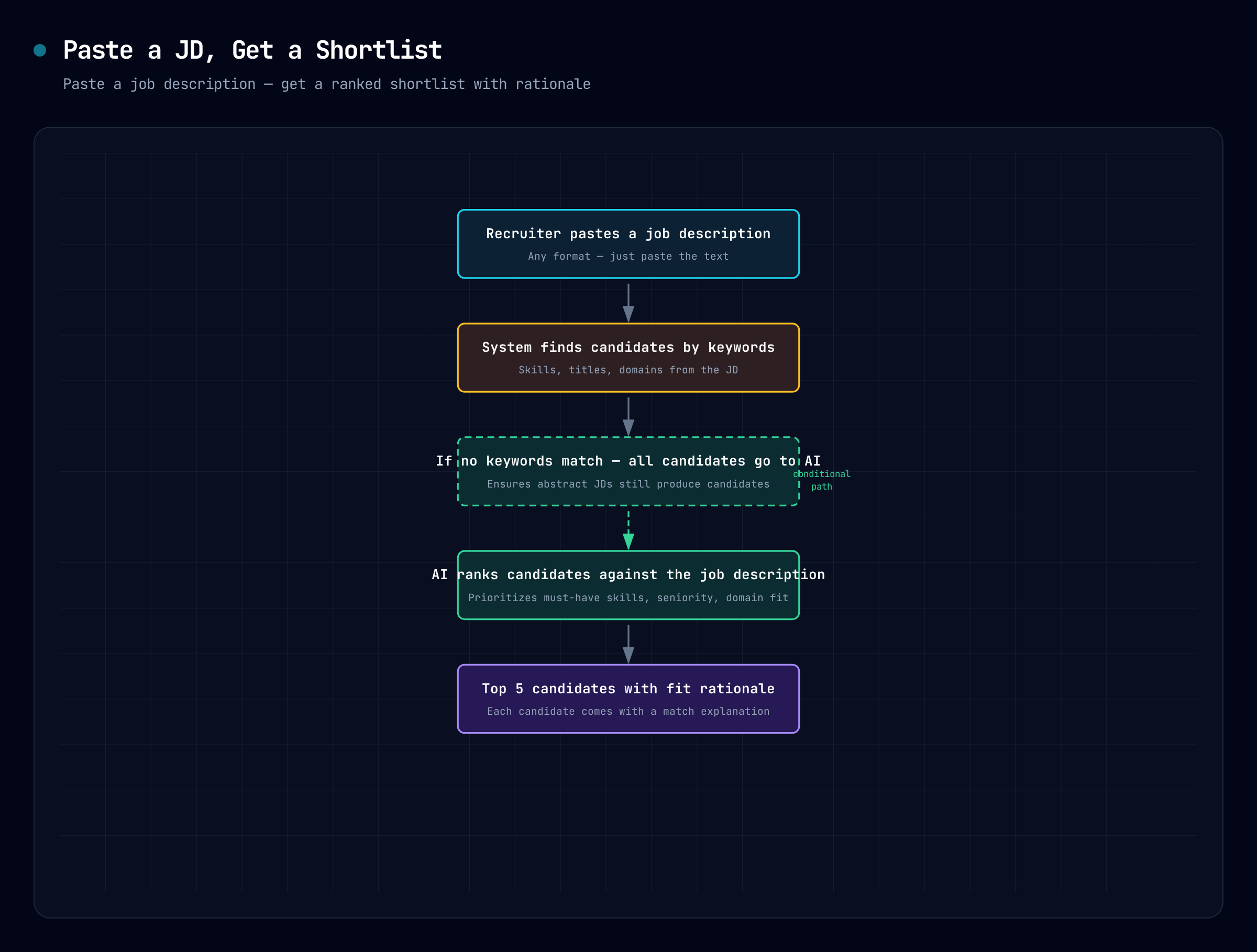
Paste any job description as plain text. The system finds candidates by keywords, then AI ranks them against the JD - prioritizing must-have skills, seniority, and domain fit. If the JD is too abstract for keyword matching, all candidates go to AI for ranking. You get a top-5 shortlist with fit rationale for each.
4Target Architecture
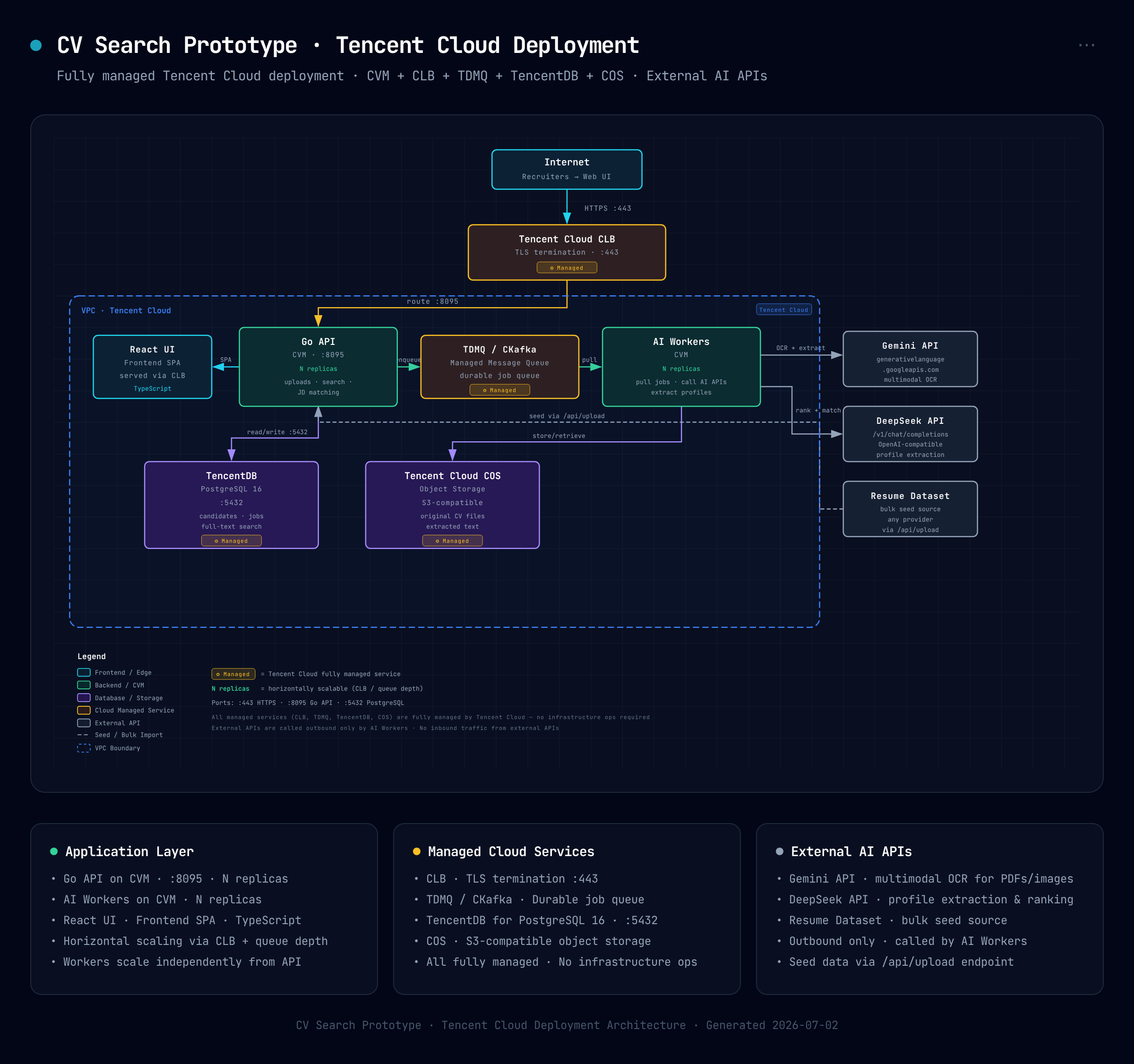
The prototype runs as a single Go binary in Docker. The target architecture scales it on Tencent Cloud: CLB for load balancing, CVM instances with N replicas, TDMQ/CKafka for durable messaging, TencentDB for PostgreSQL, COS for object storage - all fully managed.
Infrastructure Specifications
| Component | Tencent Cloud Service | Port | Purpose |
|---|---|---|---|
| Load Balancer | CLB (Cloud Load Balancer) | :443 (TLS) | HTTPS termination, routing, health checks |
| API Server | CVM (Go binary, N replicas) | :8095 | REST API - uploads, search, JD match |
| Workers | CVM (Go goroutines, N replicas) | - | Pull jobs from queue, call external AI APIs |
| Message Queue | TDMQ / CKafka | Managed | Durable job queue - survives restarts |
| Database | TencentDB for PostgreSQL 16 | :5432 | Candidates, jobs, full-text search |
| Object Storage | COS (Cloud Object Storage) | Managed | Original CV files, extracted text |
| AI Vision | Gemini API | External HTTPS | Multimodal OCR for PDFs/images |
| AI Text | DeepSeek / OpenAI-compat | External HTTPS | Profile extraction, reranking, JD matching |
Built as a prototype. Designed to scale. The current PoC is live at cv-search.zahranm.cloud - single container, JSON file store, in-memory queue. The target architecture shows the path to production on Tencent Cloud: CLB, CVM with N replicas, TDMQ/CKafka durable queue, TencentDB, and COS - all fully managed.